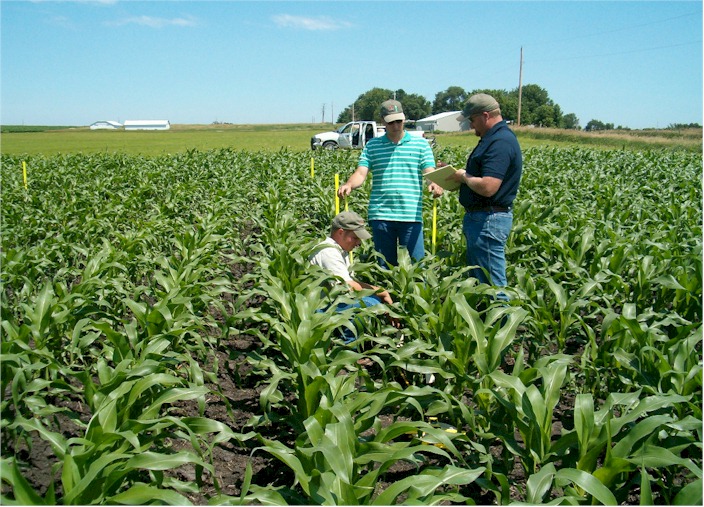
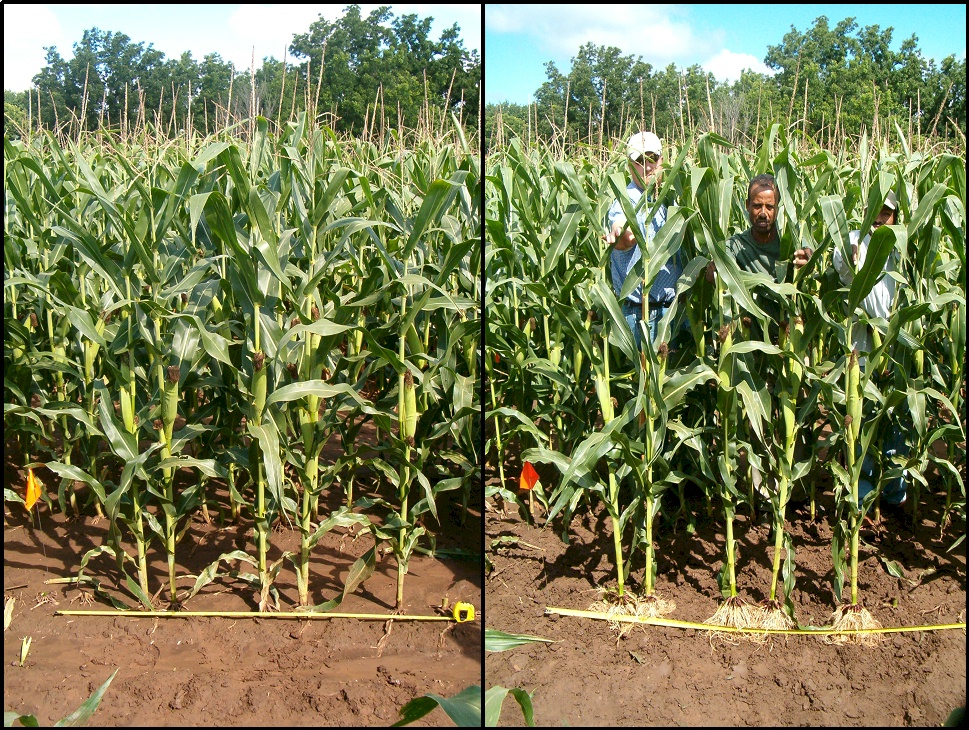
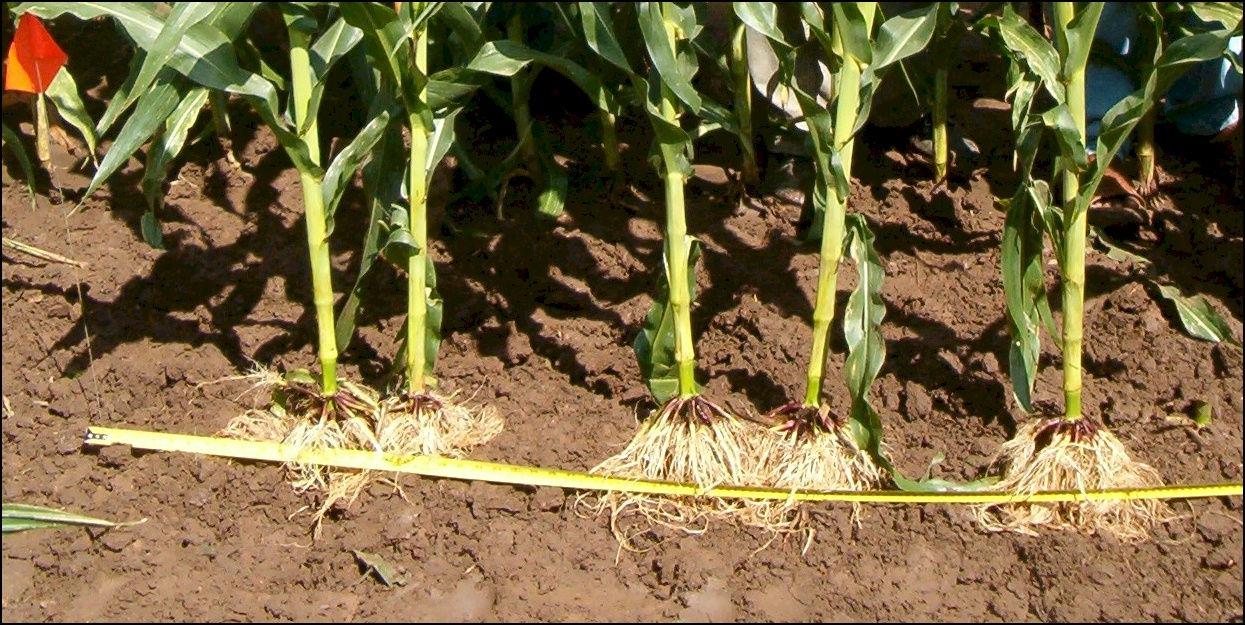
|
| Causes of Plant to Plant Variability in Corn Production Systems (Corn Irrigation, LCB) |
  By Plant Yield Prediction in Corn Production Systems By-Plant N Management and Delayed Emergence Trials
|
|
Causes for
nDelayed and uneven emergence
The impact of uneven
stands takes place prior to the time that irrigation is employed whether
using surface/furrow or center pivot systems.
Unless there is severe
drought at planting, the first irrigation seldom takes place before
V4
|
|
Plant to Plant Variability in Corn
Production (Agron. J. 97:1603-1611) (pdf)
By-plant variability in corn grain yield (45 transects) (Included in
this study are data from Argentina, Mexico, Nebraska, Iowa, Ohio, Virginia,
Oklahoma)
What
are the Errors in Predicting Yield on a By-Plant Basis? |
|
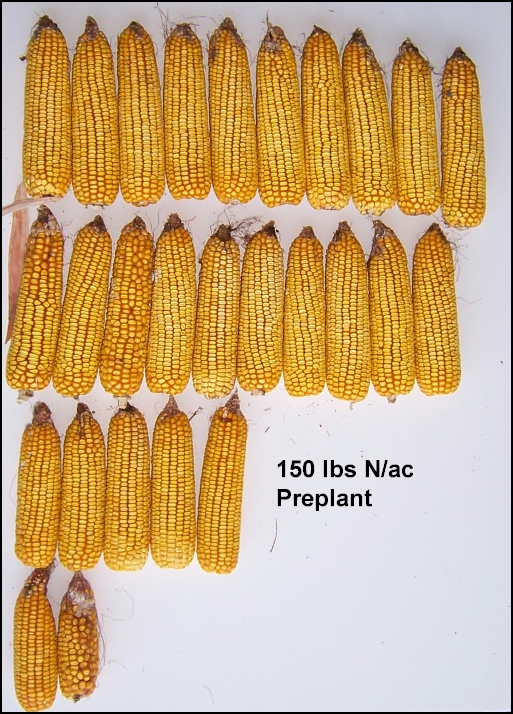 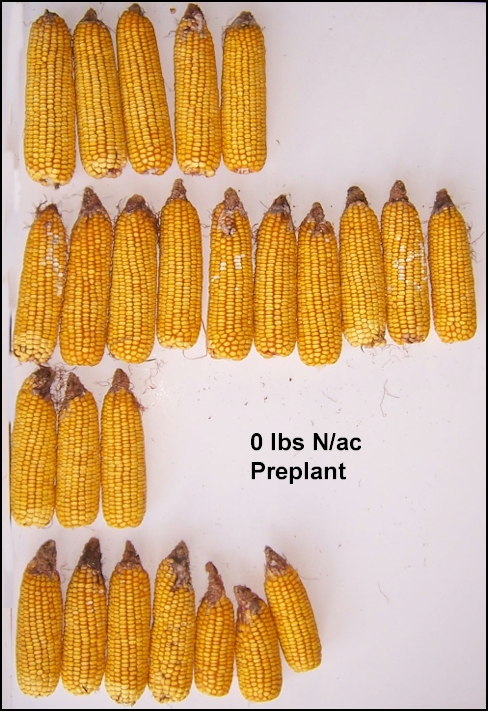
2 Rows, 15 feet in length, 30 inch rows, Lake
Carl Blackwell, 2005
FIELD STUDY
|
|
Corn Development Iowa State University
Why it is possible to predict corn yield potential from V8 to V12? Because much of the yield potential of each plant is determined prior to V12 |
|
V3: all the leaves and ear shoots have been formed
V6: growing point and tassel are above the surface nodal root system becomes the major supplier of water and nutrients V9: An ear shoot (potential ear) will develop from every above-ground node, except the last six to eight nodes below the tassel. V12: number of ovules (potential kernels) on each ear and the size of the ear are now determined The number of rows of kernels per ear is established Moisture or nutrient deficiencies at this time may seriously reduce the potential number of seeds and size of ears harvested V17: determination of the number of kernels per row |
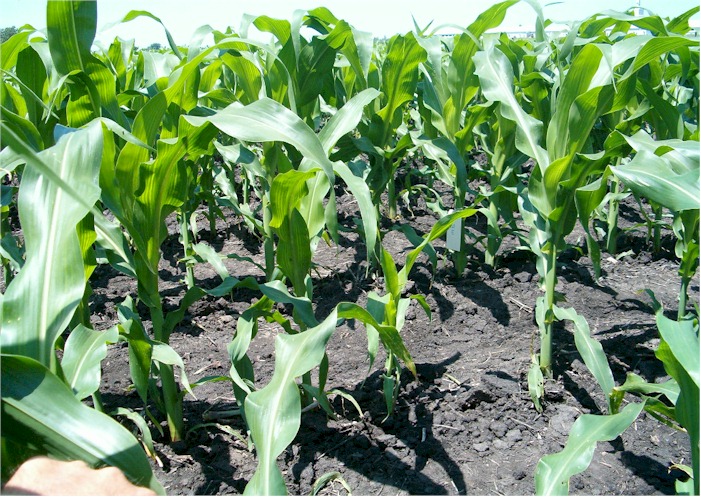
Uneven Corn? Iowa State University
|
 |
Return to
 |